Showing posts with label Stories By Big Sister. Show all posts

Tuesday, August 26, 2014

Along the Old Road, written by Big Sister

Hello there readers! I wrote this story for school using the poem "To David Campbell" as a stimulus.  I put the poem here as I couldn't seem to find a link online.  I suggest reading the story first. ;)
                   ____________________________________________________________ 

DEAD FOX BY EDGAR DEGAS

The sharp cold morning air nipped at Philip’s lungs and pinched his fingers. He walked through the frosty paddocks and down to the dry sandy riverbed, rejoicing in the quiet stillness.   

Wherever he was, Philip always walked alone in the mornings; to think, to enjoy the solitude and quiet.  Here on the rural property of his friend David, the mornings were wondrous in their newly born splendour.  Poetry wrote itself in his mind as life unfolded softly in the singing birds and arising light.

In the riverbed he found a stone, smoothed by water and shaped like a heart.  Philip smiled and put it in his pocket before continuing.

His feet pulled through the sand.  He was lost in deep contemplation, his narrow shoulders hunched, his dark head hanging down on his chest, and his dark-grey eyes watching his feet.   He almost missed it, but a corner of his sight caught the patch of red, and he turned abruptly to see the body of a fox stretched out cold on the ground.  He stood over the little form. Its coat was damp with dew.  “Poor chap!  Poison, perhaps?” he said out loud.  He leant and touched the silky red fur. 

Then he walked on, though a little of the glory seemed to have faded from the morning.

Later, Philip rambled with David along one of the property’s dusty trails.  David’s dog, Joe, ran about like a child on a sugar high.  There was an old ghost gum leaning almost over, still healthy and alive. The dog ran up it, barking happily; then his paws slipped and he fell to the ground.

  David laughed at him.  “Half-witted animal!”

Philip grinned at him.  “I bet you couldn’t climb a tree.”

“Oh really, you old cow?  You bet eh?  I’ll show you!” 

“Not the leaning one!  That doesn’t count.  A baby could climb it.  This one.” Philip touched a tall, smooth gum.

“Fine!”  David’s strong arms pulled, his feet scrabbled awkwardly for footholds.  Philip stood with his arms crossed, laughing, as David climbed high then slid uncomfortably down again.   His white trousers were filthy and ripped, his arm was bleeding from a cut and his fair hair was dark with sweat, but he grinned triumphantly. 

“Ha! Lost your bet!”

“Oh, did I?  Or perhaps I knew you could climb it all along and just wanted to laugh at you.  I’ll write a poem about it.  ‘My friend David climbed a tree; just like a half-baked drongo looked he--”

“Hey!  Put a sock in it!” cried David.  “You and your poetry…!”

Further along, they came to an old road –once busy, now just a roaming-place for cattle and wildlife.  It stretched its long length between scrabbly bush.  Philip’s mind wandered down it absently; till he looked around and saw David beckoning him.  Philip followed, curiosity wrinkling a small frown on his forehead.

David led him into a grove of trees.  In the center of it were several mounds, long grassed over with age. “Graves,” David said quietly, in reply to Philip’s questioning look.  “Early settlers here.  One of them was my great-great grandfather.”  He took his hat off and held it before him. Philip saw his huge shoulders and his face with its broken nose soften in respect; his usually playfully twinkling blue eyes grow thoughtful.

 The wind rustled gently in the tall gum trees.  Philip could feel, still lingering faintly in the air, memories of bygone sorrows; and the trees remembered the sounds of broken hearts weeping.  He stood next to his friend in thought for many minutes.


In the afternoon, they saddled up two frisking horses for a ride.  They took the old road.  Philip breathed deeply, the gentle winter sunlight soaking warmly into his skin.  His horse swished its tail and threw its head about, restless as the ever-moving butterflies that fluttered past.  Philip began to rise to a trot, then a canter.  Then, “beat you to the end of the road!” he called to David; and leaned forward into a gallop.

They thundered along the trail, clouds of bulldust rising behind them.  Their horses breathed in air through wide nostrils, eager, excited.  Philip’s heart took wing as the wind rushed past his face, and he shouted for sheer joy.

Something, a kangaroo perhaps, flew crashing out of the scrub and across the road.  David’s horse, terrified, shied away with the speed of a whip.  David was flung off and slammed hard into the ground.   Philip pulled his frightened horse to a halt with desperate hands.  He was by his friend’s side in a moment.

“David!  Are you all right?” he gasped.

David was still.  Philip knelt down.  His throat all of a sudden gasped dry and he felt nauseous with a terrible fear for which there could be no words.

Everything that passed after that was misty, dreamlike.  Philip refused to be parted from David for a moment.  He was there when they loaded the still form into the ambulance, and when they carried him into the hospital.

By David’s bed, in a moment alone, Philip whispered words filled with such pleading.  “Please… come back… wake up… open your eyes.”  There was no reply. 

Philip looked through dull, wet eyes at the mound of fresh earth, veiled with a mantle of flowers.   Flowers and tears, last gifts from the living to the dead.  Philip felt as though his heart was gasping for air under its crushing load of loss.  David… just before sparkling with life, then extinguished like a snuffed candle.

Philip’s mind, shrouded in grey misery, searched desperately for answers. How could a being, so filled with life, so real, so normal, so human, die, and turn back to dust?  This is not how it should be. 

Beyond his anguish, a whisper answered him.  When he had seen the coffin, heard the dull thud as it dropped down into the earth; he had felt through his sobs that somehow, it was not really David in that cold white box.  For he had gone to the land where everything is shining light under the Greatest light of all.  


Philip leant down and placed the heart-shaped stone, warm from his hands, on the grave; then resumed standing in silent thought beside the still mound of earth.

Wednesday, April 2, 2014

"The Sound in the Abbey", told by Big Sister

Simon the traveller shivered and pulled his cloak closer about his shoulders.  The sky was an ominous grey color, and the wind that whipped the grass was bitingly cold. Thunder rumbled.  He urged his tired horse on faster, hoping to find shelter before the storm broke.  As his horse ascended a hillock, Simon caught sight of the large, imposing form of an abbey on the horizon.  But before he was halfway there, the storm broke.  Lightning flashed, and rain bucketed down so heavily that it was difficult to see.  By the time he reached the large wooden gates of the abbey, Simon was soaked to the skin and shivering with cold.  He dismounted quickly and pulled the bell-rope.

A few minutes later, Simon was standing, dripping wet, inside the abbey kitchen.
The monk in charge of the kitchen, who had friendly brown eyes and a rather round tummy, smiled.  “My, you must be cold!  Stand in front of the fire while I get you some dry garments,” he said. “I’m brother Thomas, by the way.”
 Simon was most happy to comply with the monk’s wishes, and it wasn’t long before he was clean, dry and had a hearty stew warming his insides.  He was then shown to a small, simply furnished room.  “I trust you will sleep well” said Thomas.  “Good night, and may God give you peaceful dreams.” Simon, completely exhausted, flopped onto the bed and was soon fast asleep.

.:. .:. .:. 


He  awoke with a start and sat bolt upright, his flesh crawling. He was sure he had heard something. He listened intently for a few moments, but all was silent.  “Probably an early morning mass or summat,” he muttered sleepily, and lay down again.  Then he heard the sound that had awakened him.  It was the most beautiful, yet the most awful thing he had ever heard. Simon was filled with ecstasy and dread at the same time.  He wanted desperately to run away, to hide himself from it, but the sound held him a hypnotized captive, and he could not move. So the he lay and listened, sweating despite the cold, his heart pounding in his ears.  At that moment, he knew that at all costs he must find out whatever it was that made that sound.
Eventually the sound died away.  Shaky and weak, Simon quickly fell asleep again. His dreams were filled with the sound.

The first thing in Simon’s mind when he awoke next morning was the sound he had heard in the night.  Could it have been a dream?  No.  He knew it was more than that.  Simon leapt out of bed and rushed down to the kitchen.  Brother Thomas was there, stirring a huge kettle of porridge that hung over the fire.
“You are up early, my friend!” said Thomas, handing the traveller a bowl of steaming porridge. “I trust you slept well?”
“No, no indeed!” cried Simon.  “I was was awakened in the night by the most fearsome, wonderful sound that I have ever heard.”
Brother Thomas inhaled sharply. “You heard the sound? I am sorry.  Very sorry.  It does not usually wake people up.  If I could have stopped it, I would have… but it will have its way!”
“It?  Please, show me what it is that makes this sound, so that I can be at peace!”
Thomas shook his head.  “I cannot tell you.  Do yourself a favor and forget about the sound.”
“Nay, that is impossible.  If I do not know, I am sure that I will die!”
Thomas sighed.  “I would certainly tell you if I could, friend, but I am afraid that only those enrolled in the fraternal bonds of monastic brotherhood are allowed to know that.”
“Eh? The fraternal what?”
“Bonds of monastic brotherhood.”
“D’ye mean I have to be a monk?
“I’m afraid so.”
“But it will take years to become a monk,” groaned the unfortunate man, “I could not bear the wait-- I must know at once!”
“I am sorry,”  said brother Thomas stubbornly. “I dare not change the rule.”
“Very well,” said Simon, his voice grim with determination, “if it must be so. I will begin on my journey to join the fraternal bonds of ...er, monasti-whatever it is this very day.  And he sat down and began to eat his porridge.

.:. Several years later .:.


 Simon rode eagerly along the road to the abbey.  He was dressed in a habit, and his head was shaved in a cenobitic fashion; for during the last few years he had graduated as a “member of the fraternal bonds of monastic brotherhood”- in other words, he was a monk.  As Simon caught sight of the abbey, his pulse quickened and his eyes grew bright with feverish anticipation. For the sound he had heard had never ceased to haunt him, and today would finally find out what it was.

As soon as his horse was stabled within the abbey walls, Simon headed straight for the kitchen. Standing at the large kitchen table, elbow-deep in bread dough, was brother Thomas; the round, warm-eyed monk who had welcomed in our traveller when he was cold and wet and hungry.
Thomas looked up and started in recognition. “You!” he exclaimed. “So you really did join the fraternal bonds of monas-”
“Yes,”  said Simon, smiling.
“Sit down and have something to eat,” said Thomas , dusting the flour off his hands.
Simon sat down.  “It is good to see you again, brother Thomas.”  He paused. “I suppose you know why I am here?”
“I can guess,” said Thomas.
“You will show me then?”
“Yes.  You are a monk, and I cannot deny your request, even though I wish I could. But you must wait until tonight.”

.:. .:. .:.

That night, when the moon was high in the velvety black welkin, brother Thomas woke Simon.   “Come,” whispered Thomas, “follow me, and do not make a sound.”  
Simon noticed with interest that Thomas was carrying a crowbar. However, he said nothing, and followed him silently until they came into a cool, dank cellar. The cellar was very seldom used, being small, damp, and inaccessible, and was empty apart from some barrels in the corner and a few ancient bottles of wine on the rotting shelves.  Thomas closed and locked the cellar door behind them; then leaning his crowbar against the wall, moved aside some barrels, knelt down and began running his hands over the stone floor.  Simon looked on in surprise.
“What are you looking for?” he asked.
“Shush!”
“Sorry.”
“We have to lever out one of the stones.  I’m trying to find it,” whispered Thomas. “Ah! Here it is.  Come and help me lever it out.”
As quietly as possible, they used the crowbar to heave out the large flagstone, revealing a solid trapdoor built of steel and wood.  Beneath the trapdoor was a black hole.
Thomas wriggled through the hole backward and hung there on his elbows.  “The floor isn’t too far down, but you’ll have to drop,” he said.  “Give me a moment to get out of the way before you follow.”
Thomas dropped down with a soft thud.
Simon shuddered, for he hated the dark and all its horrid creatures, then dropped down after Thomas.
 Thomas lit a torch and held it up, illuminating their surroundings. They were standing in the entryway of a staircase that had been carved out of the solid rock.  Cobwebs brushed against them as they began to descend.
The staircase went steeply downwards deep into the earth. Simon didn’t count the steps, but it seemed to him there must have been thousands. But after a considerable amount of time, he noticed the staircase growing slowly less steep, until by degrees it became a horizontal tunnel.
The tunnel was freezing cold, water dribbled in little rivers down the walls, and there was a strange smell about. Simon  sniffed nervously, and he was just going to ask Thomas if he was sure about poisonous gases when he felt something crunch under his foot.  He looked down to see a skeleton, and gasped with horror.  “What is that?” he cried.  “How did he die?  Brother, are you sure the air is good down here?”
“Ah, I forgot to tell you about the skeletons,” said brother Thomas.
“Skeletons?  Are there more?”
“I’m afraid so.”
“H-how did they get here?”
“Each has its own story, and I could not tell them all.  However, I do know what happened to this  particular fellow: he was a thief.  Many years ago, this place was protected by armed guards.  They killed the thief and left him there as a warning to others.”
Simon’s hair -or what was left of it-  stood on end, and he looked very strange.  Then to make things worse, an enormous, shaggy spider plopped onto his head and ran across his face.  He gave a strangled yell and brushed it off.  And when he saw a huge rat skulking in the shadows, Simon began wish he had never come, and that perhaps the sound wasn’t so wonderful after all and that he should go back to his nice warm bed.
Then he heard it.
 The sound echoed around the passage, much louder than before, far more wonderful and indescribably terrible.  Simon forgot his fears; Thomas’ face shone.  Together they hurried down the passage, the sound growing ever louder.  As they grew closer to the sound, the walls of the tunnel ceased to be wet and dirty.  They were adorned with paintings and magnificent tapestries.  Many other things were in the passageway; things like weird and beautiful statues and ancient artifacts. At intervals the smooth walls of the passage were interrupted by large wooden doors studded with jewels.  Numerous skeletons lay around. But Simon didn’t notice, nor did he notice the bats, snakes and other horrid creatures that slithered, crawled and fluttered about him. All he cared about was the sound.
Suddenly the passage ended.  The pair were in a large, perfectly circular room.  The high arched ceiling was supported by silver beams.  In the middle of the ceiling hung a huge lantern that filled the room with light. The walls of the room were painted with montages and strange symbols, and were encrusted with precious jewels. It was wondrous sight, yet Simon gave it only a glance. His eyes were fixed on a huge door directly ahead of them. The door was exquisitely carved from oak, and in the center of it was a strange symbol made of diamonds.
The sound was coming from behind it.
Small drops of sweat rolled Simon’s forehead.  He wanted more than anything else to see what was behind the door, but terror held him.  He shook with the unbearable emotion of terror and joy combined.
“Come,” said Thomas in a hushed voice.  He took the Simon’s arm and led him to the door.  The sound grew louder.  Thomas drew from his habit a tiny key, carved from a single emerald, inserted it into the lock and twisted it. Then he drew a deep breath, shuddered, and threw open the door.  
Simon gasped, staggered back, and his eyes were filled with wonderment.  For there before him he saw--

Here, my friend, I’m afraid I must leave you, because as I clearly specified earlier in this tale, you must be a part of the “fraternal bonds of monastic brotherhood” to know the source of the Sound. In other words,
You have to be a monk to find out. 

.:. THE END .:.


ABOUT THE STORY:  I say "told" because I didn't come up with the plot-- this story is actually based on a joke that was related to me.  I just turned it into a story.  No idea who wrote it (the joke, that is) originally, but it can be found online. :) 

P.S HAPPY APRIL FOOLS!  (even if it is, ehem, slightly late).  Were you annoyed??  Yes?  MWAHAHAHA! HAHA! HA! 


Guess what else? I actually was planning to write this for last year's April Fools.  But it was kinda late and... well, here we are.  "Such is life."  (If you don't know who said that, you're probably not Australian.  It's what Ned Kelly, an outlaw, said just before he died.  Okay, I'll admit I had to look it up to double check).

Tuesday, February 25, 2014

'Feathers,' by Big Sister

Hello all! Here's a story I wrote for an English assignment this year. :)
The best thing about being forced to live in an Enclosed Village with thirty-two witless chickens and a narcissistic rooster is that there’s always available food.  The worst is that when attacked by an enemy… there’s nowhere to run.

Living with chickens is no salad garden.  They’re greedy creatures.  My wife and I are distinguished Indian Runner ducks and would prefer more intelligent company, but, well, we have no choice.

My wife’s name, unfortunately, is Cinderella.  A bunch of grubby human children chose our names.  They called me Kevin and I won’t reveal my thoughts on this; it makes me too angry.  My only comfort is the rooster’s name: Scruff-Yuck, decided by the children’s opinion of him.  That’s what stops him teasing me about my name, and perhaps from becoming the most arrogant creature on earth.  

 One Saturday, I was enjoying my bath, and Rodney flew down to join me.  He’s a good mate of mine --smart as a brown snake and as fierce as a broody hen--  and likes a little wash himself once in a while.  As a matter of fact he and his expansive family of Apostlebirds feel themselves free to take liberties with anything of ours, especially food. Rodney (proudly named by his mother) chatted with me for a while comparing worms with grasshoppers and complaining about the awful racket the Lorikeets make every night before going to sleep.  Then he said, “Orange’s gang has been causing trouble.”

Orange leads the Crows, arch-enemies of farmers and livestock since Adam was cast out of Eden.  They steal chicks and eggs and have been known to peck the eyes out of weak sheep.  They are the only fellow birds who are not welcome in our Enclosed Village.  All birds are united with us in that -even Scruff-Yuck.  There’s nothing we can do:  Starting a fight could have dire consequences. 

“What’ve they been up to now?” I asked.  
“Stole two chicks over the hill.  Mother hen was in hysterics for three days.”
I stopped grooming myself and shook my head. “Shame on them!”  I paused.  Then, “Cindy’s been trying to go broody-  we want ducklings.  But every time she lays an egg, those feathered devils steal it.  She’s pretty upset.”
Rodney looked sympathetic.  “Have you tried hiding them?”
“Naturally!  Though we’re going to try a little harder this time.  Under the Coop.  It’s cramped and dirty, but she’s willing to give it a go… it’s only a few weeks, thank goodness.  I said I’d give her a hand with the Sitting.”
Rodney grinned at me.  
“You’ll make a great dad, mate!  I can just see you helping teach a floppy duckling how to swim-  flappin’ ya wings in rage and goin’ red in the beak-- well, I gotta go now.  Had me fill of your lovely grain and stuff.  Bye, old Roast!”  
Away he flew.  


Cindy and I had been caring for the eggs for almost a week before Orange discovered them.  He and his mates Eyeball and Bin-Juice noticed me just as I squeezed under the house, and came to investigate.  

“What’ve ya got there, mate?” Orange twanged, his voice shockingly high-pitched for such an impressive looking guy.  
Bin-Juice hopped over on one leg.  “Arrgh harrgh! Eggs!” he said. “How many of ‘em is there?” 
My feet felt clammy.
 “Look, here’s a deal,” said Orange.  “We’ll only take three, and you can hatch the rest.  Fair enough, eh?”  

Cindy was sitting tight and brave on those eggs, but her beak was pale and she was shaking.  I shoved my way out from under the coop.  “Only three?  Sure!  Take three of our babies now, then you can have the rest when they’re bigger!”  
“That’s the idea, mate.”
Cinderella just looked at me, pleading for her babies.  
I could feel the blood draining from my bill, but I shook my tail and said: 
“You’re not taking our children.  Therefore, no eggs.  Got it? Go help yourselves to the human’s giant dump-bucket pile.”  

Orange, Bin-Juice and Eyeball stared at me with their beady, shrewd, wicked little eyes.  Eyeball stuck out his neck and pushed his face into mine. “Well then, mate.  I guess we’ll just have to take ‘em for ourselves! 

They began to crowd close, trying to shove past me.  Enraged to the highest degree, I puffed myself up to my full height and pecked Eyeball on the eye, whacked Bin-Juice with my wing, and with a loud cry flung myself at Orange.  I fought hard and inflicted some damage I think, but in moments I was pinned to the ground.  Orange cawed with rage.  “I’ll kill you!” he shouted, then looked up as a shadow fell over us.
“Ehem!”
It was Scruff-Yuck.
“Get off my territory!” he said pompously, and pecked viciously at Orange’s head.  “Or I might be forced to use these.”  He stretched out his leg to show off his long, sharp spurs.  “Quick!  Remove your fat, sausage-like bodies from my sight immediately!”  And he crowed loudly to show that he was Scruff-Yuck the great, and no-one ever disobeyed Scruff-Yuck the great.  

With a flurry of gleaming black feathers they left.
Scruff-Yuck looked at me.  
“Thanks,” I muttered.
He shrugged.  “Gotta establish my territory” he said, turned his large, fluffy bottom around and strutted off.

Rodney appeared out of nowhere.  
“That was lucky mate,” he said seriously.  “Those crows are savage.” 
 Then he saw the funny side and grinned.  “Lucky good ole Scruff-Yuck was there to help you.”
“Scruff-Yuck,” I said coldly, “thinks a lot about his greatness; yet for all that he still has a large, fluffy, bottom--”
A shadow fell across us.
It was Scruff-Yuck.
He had come to get some food out of the Communal Food pan.  He pecked at it absently, but the shocking implications of what I had said were too much.  He soon walked away and crouched sadly with his bottom pressed into a post.

My conscience pricked me like a painful bindi.  Scruff-Yuck looked utterly dejected.  
I walked over to him.
“Er… Scruff-Yuck?  I just wanted to say that--”

We both heard it at the same time.  The beating of wings.  We looked up to see the sky dark with crows -- at least fifty of them.  Scruff-Yuck jumped up and gave the alarm.  The hens scrambled to the safety of the coop, but several crows landed on the ramp and headed them off.  Then they attacked.

 Scruff-Yuck and I fought side by side, and I saw those spurs actually in use.   I wouldn’t mind a pair of those things.  My soft feet and blunt bill aren’t much use in a fight.  
I saw Rodney battling near me: he and most of his family had valiantly joined us.  But it was hopeless. We would soon be overcome. 

Then I saw the humans, alarmed by the ear-splitting racket, come running.  They stopped speechless for a moment when they saw their chicken coop swarming with wildly fighting birds.  One of them grabbed their large dog by the collar and shoved him inside the pen.  

I heard a deep growl shiver out of the dog’s throat, and saw his gums snarl back over his white teeth.   With an explosive bark he leapt at the crows and chased them wildly.  Cawing loudly, they fled.

That afternoon, we watched as the humans put strong wire netting over the top of our whole Enclosed Village.  The crows were shut out.  But Rodney soon found a place to squeeze in.  

Now that all was well again, Scruff-Yuck began to fall back into depression.  I headed over to him to finish my interrupted conversation.  
“Scruff-Yuck?”
He grunted and began grooming his wing.
“I’m sorry I said-- you know.”
Scruff-Yuck mumbled something under his beak.  
 “Pardon?” I pressed.
He burst out:  “It’s still fluffy!”
“Who cares?  I can’t even crow! Plus I have a little stumpy tail, my beak’s blunt, and Cindy says my feet get flatter every day.  You’re much better off than me!”
Scruff-Yuck didn’t answer, but
 a little smile bent the corners of his beak upwards. 

Wednesday, November 28, 2012

Book Review (by Big Sister): The Lord of the Rings


 Author:  J.R.R. Tolkien 
Rating: 5/5  
Genres: Adventure Fantasy, Speculative fiction, Fiction, High fantasy, Chivalric romance, Adventure novel

One of the greatest works of fiction of all time, The Lord of the Rings is one of my favorite books.  It is usually called a  trilogy, because it is split into three parts:  The Fellowship of the  Ring, The Two Towers, and The Return of the King.  It also has  a prequel, The Hobbit.

This amazing, incredibly written story has endured for many  years and “...will go on and on.”*  C.S Lewis wrote: “...none so relevant to the actual human situation, yet free from allegory.”  The Lord of the Rings is no ordinary fantasy story.   It expresses such things as courage, faithfulness, joy, friendship, wisdom, beauty, and the true meaning of love.  

The story begins in the peaceful region of The Shire, where a hobbit named Bilbo Baggins is about to celebrate his eleventy-first birthday, and his adoptive heir Frodo (who shares Bilbo’s birthday) is about to turn 33- his “coming of age.”

After the party, Bilbo plans to leave his cozy hobbit hole and go on another adventure, leaving everything he owns to Frodo-- even the extraordinary Ring he found deep under the Misty Mountains. Not only could the Ring make you invisible, but it also bestowed long life upon its owner.

But when it came time for Bilbo to go on his journey, he found he could not bring himself to leave the Ring.  Something seemed to draw him to it.  Only with the firm but kind help of Gandalf the wizard was he able to give it up.
He may have struggled, but in giving up the Ring,  Bilbo had done something no-one had ever done before.
*
The life of a hobbit is wonderful. They have large families, good fellowship, and enjoy simple pleasures such as gardening, singing, enjoying the beautiful countryside and, of course, eating.  Their cozy, family-oriented life never fails to give me warm fuzzies.  

Many years past.  Frodo had lived happily in the Shire his whole life, yet now he felt a strange restlessness, and a desire to follow in the steps of Bilbo.

Meanwhile, Gandalf had been searching over all Middle-Earth for more information on Bilbo’s ring, and had discovered its true identity.  The ring was the Ruling Ring of Power, and if the Dark Lord, Sauron, got his hands on it, all would be lost.

Gandalf knew that the ring had to be destroyed, and he also knew that he was unable to take charge of it himself.  So he asked Frodo to take it to the dark land of Mordor, with the aim of throwing it in the Cracks of Doom, and thus destroying it --and the Dark Lord-- forever.

Soon later, Frodo, along with his faithful friends Samwise and the inseparable Meriadoc and Peregrin, set out for the town Rivendell.  The friends had hardly left when they met the terrifying Dark Riders, accomplices of the Dark Lord.  The riders were searching for the ring.

Yet even with the awful Dark Riders on their heels, the company reached Rivendell more or less alive.  There they met Gandalf, and with the help of the Elven king Elrond formed the Fellowship of the Ring:  Frodo (the ring bearer), Samwise (along with his beloved pony Bill),  Meriadoc and Peregrin, Gandalf, an elf named Legolas and his good friend Gimli the Dwarf, Boromir (a man from the town of Minas Tirith), and the mysterious Aragorn (also a man).

From Rivendell, the Fellowship continued their journey to destroy the One Ring, travelling deep under the Misty Mountains,  through mysterious forests, on the great, rushing river of Anduin, and across endless, green plains.  They battled orcs, wargs and other fearsome creatures, and met many new friends, such as the elven-folk of Lothlorien, or the extraordinary tree-men of the forest.

I would like to add something I noticed about two of my favorite characters, the hilarious and ever-cheerful pair, Meriadoc Brandybuck (‘Merry), and Peregrin Took (‘Pippin’).  They have a story that is important to most of us.  Pippin and Merry both felt as if they were rather useless members of the Fellowship, and more like luggage than anything.  Yet in the end they both played parts that were crucial to the success of the mission.

This I found encouraging.  Many Christians who live normal lives can wonder what use they are to God.  Merry and Pippin’s story shows that “normal” people are important!

Far from Rivendell, the company was split, leaving some of them chasing after an evil band of orcs, and Frodo and Samwise travelling on to Mordor alone- or so they think, until they notice a shadowy figure following them...

The friendship between Samwise and Frodo to me defines the true meaning of love.  Sam would gladly have given his right arm, or even his life, for his master. And Frodo, weighed down by the ring as he was, depended utterly on his support.  Neither could have completed the task alone.

And as the Ring Bearer and his faithful friend continue their difficult journey, the rest of the Fellowship are battling to defend the city of Minas Tirith against the dark hordes of Sauron.  And Aragorn is preparing himself.  For Minas Tirith has been without a king for many years, and Aragorn is the rightful heir to the throne.


Footnotes: *Naomi Mitchison

Friday, November 9, 2012

Dragon by the Nile, by Big Sister: Part 2

Halima woke next morning with a feeling that something was wrong, and it wasn’t the fact that Kosey was sleeping on her neck. It didn’t take her long to remember what it was.  The dragon.  What had Mensah said?  As big as a pyramid, with eyes like pools of fire and teeth like obelisks.  She shuddered, wishing that it had been killed then and there.

The dragon plagued Halima’s mind all day, and she dreamt about it that night.  The tale of the “Nile Monster” was on everyone’s lips. It even reached the ears of  Pharaoh, who, it was said, told his men to be on the alert for it.  But  as weeks passed and the dragon was not seen, people began to wonder if the infamous reed-cutter had merely made up the tale.  Eventually, talk turned to other things.  The dragon was all but forgotten.  Even Mensah, who had talked of nothing else for weeks, lost hope that the dragon would ever be found.
*
Halima wriggled her toes, revelling in the feel of the cool Nile mud on her hot and dusty feet. She brushed a fly away from her eyes, then bent down and hoisted a large clay jar of water onto her shoulder.  She turned to go, then froze in terror.  The jar fell to the ground with a wet thud and broke into two neat pieces.  The water trickled away, but Halima didn’t notice.  She was staring at a long-necked, four-legged beast with a pair of large yellow eyes. Eyes like pools of fire.

It was the dragon.

For a few awful seconds nothing happened.  Then the dragon, instead of rushing forward and devouring Halima, began to munch calmly on some reeds.  Halima let out a gasp of relief. The dragon was not going to eat her!  And as she looked more upon the creature, a smile played about her mouth, a smile which turned into a laugh. The pyramid-sized monster everyone had been talking about was closer to the size of an ox, and it was eating reeds with blunt, herbivorous teeth.

Halima took a tentative step towards the long-necked beast, wondering if it would let her touch it.  Imagine telling Mensah that she had touched a dragon! The dragon didn’t seem in the least concerned, so she slowly moved towards it until it was in touching distance.  Halima’s heart was in her mouth.  Slowly, carefully, she reached out her arm and touched the dragon’s cold, scaly hide.  It looked at her curiously.

“Hello,” whispered Halima.   The dragon reached out and touched her forehead with its nose.   Then suddenly it turned, and made a strange sound. And to Halima’s great surprize, a reply, hardly audible, came floating from the other side of the Nile.   There wasn’t just one dragon-- there was two!

Halima’s dragon didn’t hesitate before it plunged into the water and began swimming to the other side, stirring up a cloud of mud and soaking her with spray.  She watched it grow smaller and smaller, till finally it reached the other side to join its companion.

Halima knew somehow that she would never see the dragon again.  She wondered if her family would believe her tale.  Her younger brothers would, that was for sure.  And even if no one did believe her, thought Halima, she could go about her life with the knowledge that she was the only person in Egypt who had touched a dragon.


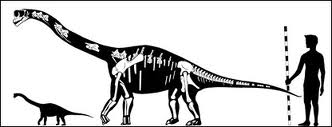
NOTE: The description of the dragon in this tale is based upon that of the Europasaurus holgeri,  a ox-sized sauropod.

Monday, November 5, 2012

Dragon by the Nile, by Big Sister: Part One


Mandisa!  Stop pulling Kosey’s tail!”  cried Halima.  Her baby sister just giggled, and grabbed a handful of the cat’s yellowish fur.  Kosey put his ears back flat against his head, then wriggled free and sprang out the door, where Halima’s mother had just a appeared. She looked at Halima’s hot, frustrated face.  “I’ll watch Mandisa now,  and you can go get some bread,” she said, handing Halima some coins.  “You may as well take Dakarai and Amil.”  Dakarai and Amil were the youngest of Halima’s four brothers. They had to stay at home, while the older two, Nakhti and Mensah, were old enough to work in the fields with their father.

Halima was soon trotting down the dusty road towards the marketplace, the warm damp hands of her brothers held tightly in hers.  By the time they got home it was dusk, and Halima’s brothers, along with her father, had returned from the fields. Mensah, who at ten years of age was two years younger than Halima, was bursting with news.  

“Have you heard about the dragon?”  he asked, his eyes shining with excitement.  Halima shook her head.

“Well, I’ll tell you then.  A man named Gudu -or was it Habu?- was cutting reeds when a huge dragon rose out of the depths of the Nile! They say it was the size of the great pyramid, had eyes like great pools of fire and gigantic teeth sharper than arrows.”  Mensah paused for effect.

 “What happened?”  Halima’s eyes were wide.  This was not like Mensah’s usual stories of robberies or new babies.

“Just as it was about to eat the man all up, he  threw his scythe in its mouth and ran away as fast as he could to warn everyone.  But when they went to search for it.... it had disappeared into thin air.  So the dragon is still alive-- and somewhere in Egypt!’’

Friday, November 2, 2012

Dragon by the Nile, by Big Sister: Prologue

The air shimmered beneath the hot Egyptian sun.  It was noon, the hottest time of the day, and few people moved about the marketplace of Menes.  The cloth-seller, a little man with a wide mouth, wiped his hand across his damp forehead.  He had just  settled down comfortably for a lunch break when a man, wild-eyed and covered in mud, came hurtling into the square and flung himself into the cloth-seller’s stall.

 The cloth-seller  gave a shout of dismay and dropped his lunch.  His lovely cloth was all covered in mud!  The cloth-seller, pale with rage, began to sputter dire threats. “Out! Out or- or I’ll feed you to the crocodiles!” People began to hurry over to see what all the fuss was about.

“Alright, alright, what’s going on here?”  The rather large figure of Sekani the baker shoved his way into the stall.

“This man has just muddied my cloth!” wailed the cloth-seller.

“What happened, eh?” Sekani asked the man.

“I saw... I saw... Ra save us!” was the man’s only reply.  Sekani turned to crowd of people.  “Anyone got some beer?” Beer was soon supplied,  which  revived the man enough to be able to sit up and stop shaking- almost.

“Now,” said Sekani, “what’s your name? And what caused you to be so frightened as to rush about like a madman-” Sekani waved his arm over the muddied cloth- “destroying things?”

The man gulped.  “M-my name is Manu.  And I was frightened because I saw a dragon!”

Sekani laughed.  “A dragon? Impossible.  No one has seen one of those for hundreds of years!”  He looked at Manu curiously.  “However, you obviously saw something, so do go on.”

Manu complied. “I was cutting reeds on the bank of the Nile when I heard a strange sound behind me, turned to look- and lo! Rising from the Nile’s water I saw a huge creature with enormous yellow eyes and skin like that of a crocodile.  It opened its mouth, and I saw rows and rows of huge, white teeth--”

“It must have been a dragon! What else could it be?” gasped the cloth-seller.

Sekani frowned.  “I have a Jewish servant who is always telling stories,” he said slowly.  “About so-called dragons.  Previously I ignored them as ridiculous, but if what you say is true...” he paused.

The cloth-seller’s eyes were starting from his head.  “Go on, go on!”

“He said they were big enough to hold an entire man in their mouth, and that they had a tail like a- what was it? Some sort of tree...not olive or palm... ah yes, I remember! a tail like a cedar tree!”

Saturday, September 1, 2012

Letter from a Criminal


 The fifth day of April, 1888
 From: Jack Montville

Cell 66, Fleet prison
London


To: Miss Lacey Montville
450 Shade Tree Lane
Glasgow, Scotland
6783

My Dearest sister Lacey:


I cannot begin to tell you of the pain and remorse I feel.  You and mother must be so ashamed.  Because of me, people will whisper when you walk by, and stare as though you were the criminals - as though it were your fault!  Oh, the injustice of it!

The thing I cannot understand is this:  if what I did hadn’t turned out so badly, and I wasn’t sent to this awful place, then people would perhaps shake their heads a little, but they would find it easy to forgive - and to forget.
Yet, because the man happened to die later, I will be forever detested, and looked down upon as though I was something very unpleasant from the dustbin.  God can forgive, but people, it seems, cannot.  And even if someone was to forgive me, they will always remember.  It will always be a dark stain upon my record – both literally and in the minds of my fellow men.
I will not even tell you the things he said about father, it would only make you upset.  The things he said were terrible, and they were lies, all of them.  If I had a better hold on myself I could have calmly replied and left, but I have never been able to do that.

You asked me to tell you what it was like here, and I will not refuse you.  The nights are freezing cold, and my pitiful excuse for a blanket does not provide sufficient warmth.  And the food, if it could be called that, seems to have no more goodness than sawdust.  It certainly does not taste any better.
We are let out for “exercise” twice a day; and it is good to see other faces, but we cannot speak. 

I am lonely, dear sister. The jailer is about as talkative as a stone, and my only company is a large, fat mouse I call Albert, who comes each day for a crust, and a robin who sings outside my window every morning.

How is mother?  It makes me ill just thinking about how dreadful it must be for her.  Oh why, why must my terrible temper always get the better of me? I pushed that man with all my might.  I did not wish to hurt him – I didn’t even expect that he would fall.  But he did, and now there is no going back. 

I have some news for you.  I’ve been keeping it till now because I did not know how to tell you. I have decided that when I am released, I will not be coming home.  I have decided to go to Australia.  People there will not know me, and I can make a fresh start.  I know it will be hard for you, but I believe it is the best thing to do.  I think you should tell mother straight away, before she starts wanting to see me again.
I will miss you both. In fact, I miss you already.  Perhaps- perhaps, one day we shall meet again. I hope so.


With all my love,
Jack


Note:  I wrote this early in the year for schoolwork, and then proceeded to forget all about it.  Recently I found it amongst my papers, and thought I'd post it. :)
-B